
Workflow Templates
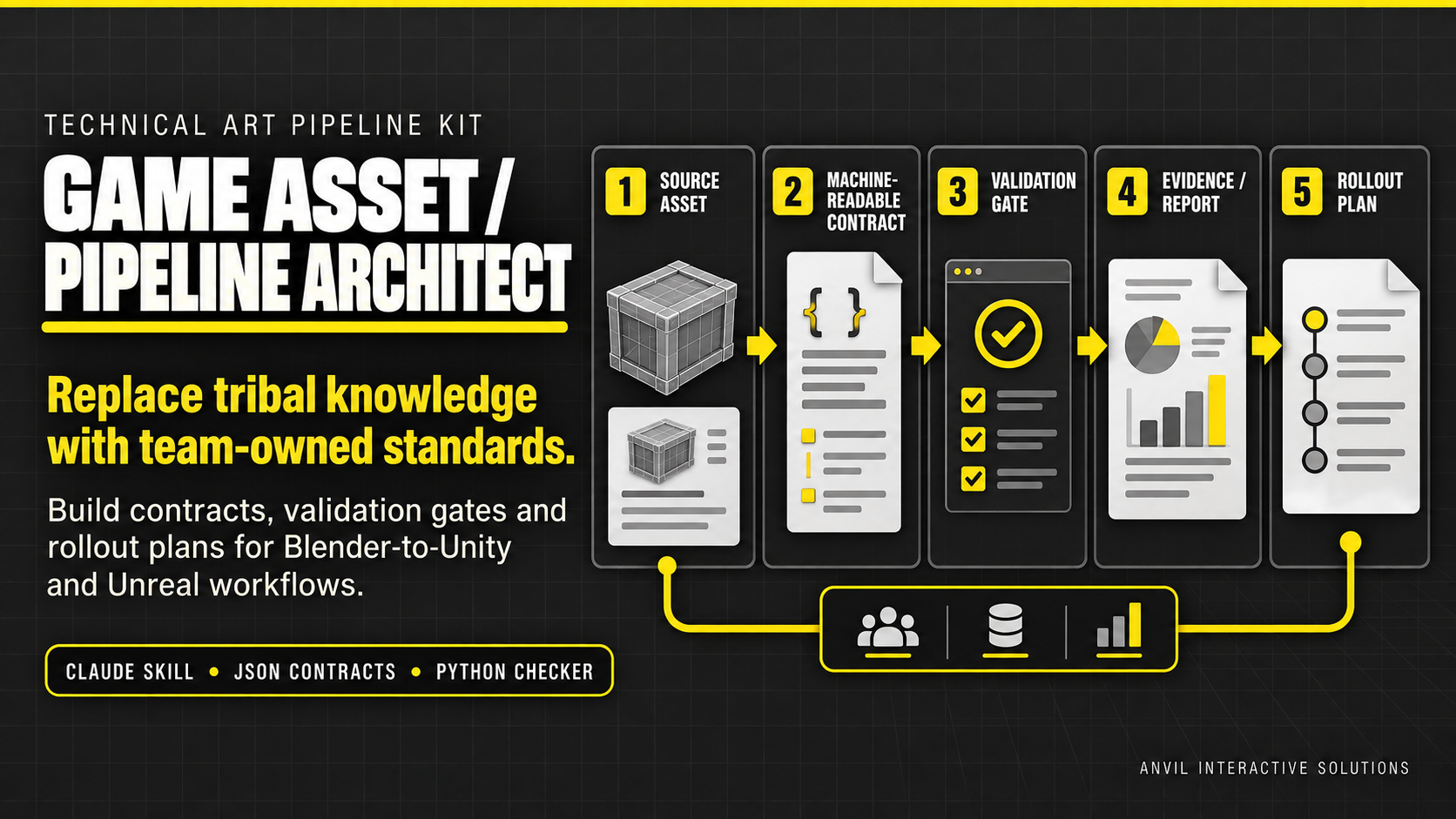
Game Asset Pipeline Architect — Technical Art Pipeline Kit
Replace undocumented handoffs with a pipeline your team can review and enforce Asset workflows often depend on tribal knowledge: one artist exports differently, an importer override gets lost, and the team discovers a pr…
Replace undocumented handoffs with a pipeline your team can review and enforce
Asset workflows often depend on tribal knowledge: one artist exports differently, an importer override gets lost, and the team discovers a problem after references or production time are already at risk.
The Game Asset Pipeline Architect helps technical artists turn that process into explicit team-owned policy. It guides discovery, separates confirmed rules from proposals, and produces pipeline documents and machine-readable artifacts that can be piloted one asset family at a time.
Included
- Claude Skill for pipeline discovery, design, review, and rollout planning
- Intake framework for tools, asset families, ownership, failures, and constraints
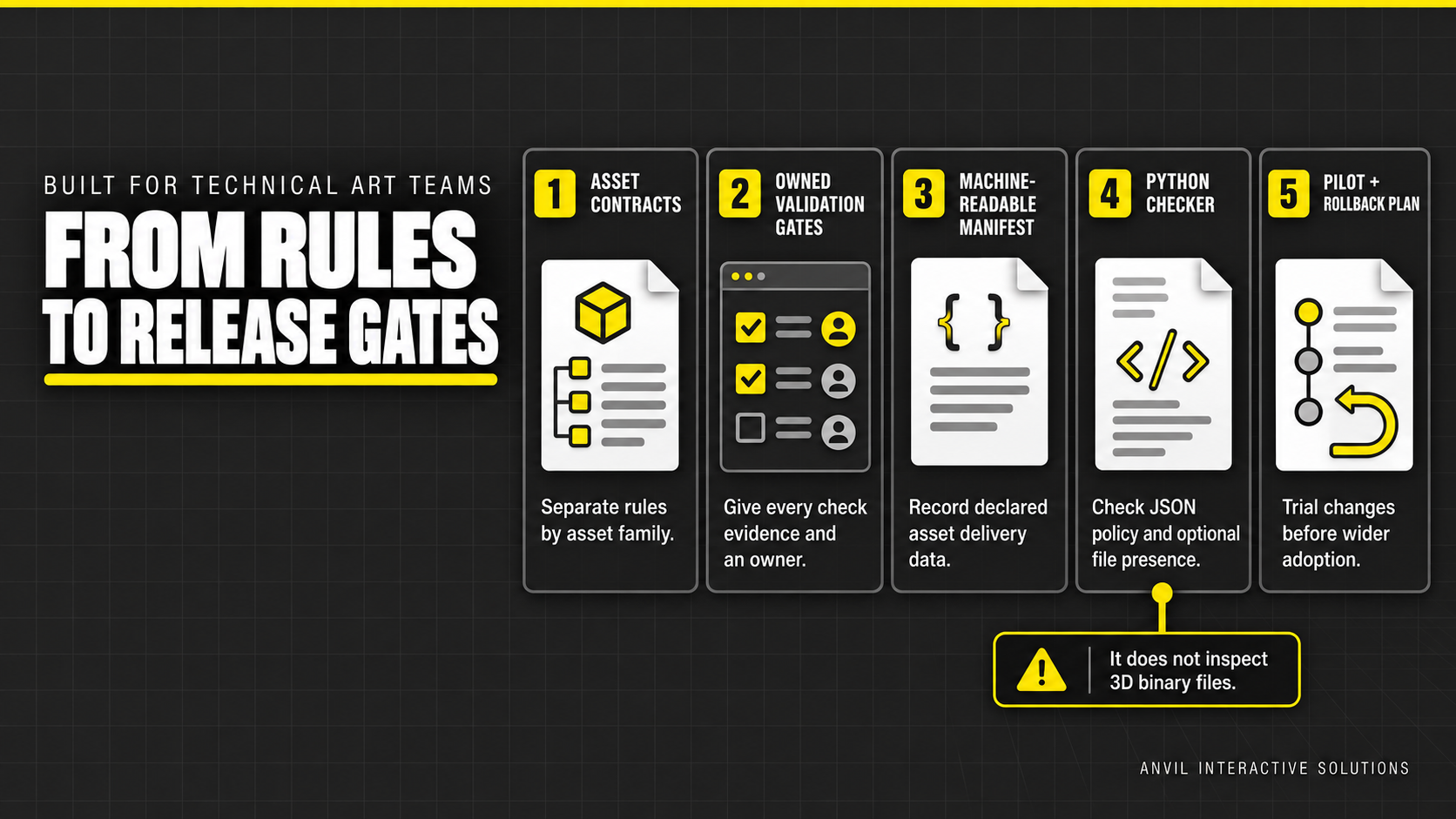
- JSON contract template and JSON Schema
- Asset manifest template
- Python standard-library manifest validator
- Validation-gate design guide
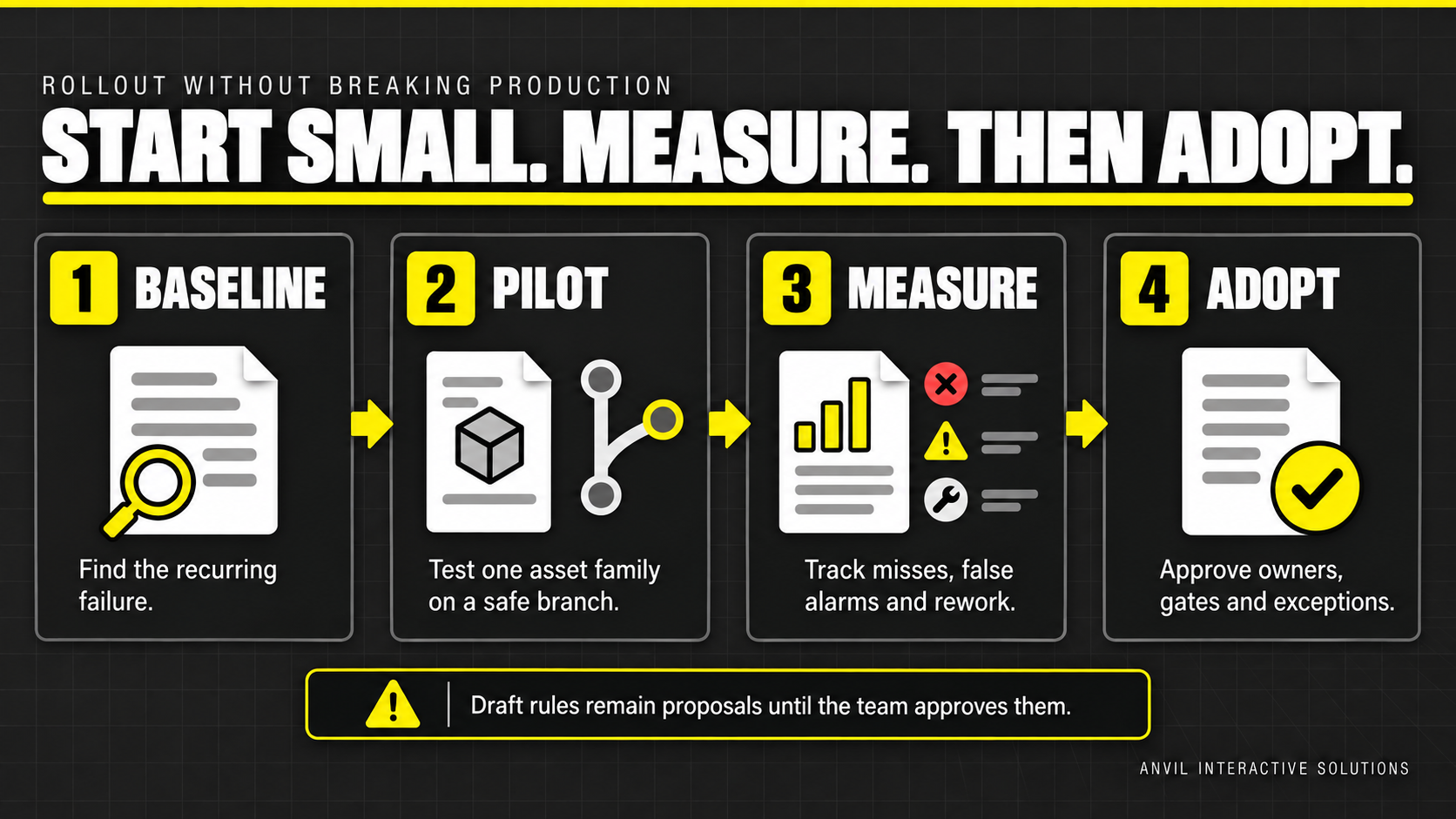
- Pilot plan, migration considerations, and risk register
- Fictional worked example and artist-facing workflow guidance
What the validator checks
- Manifest structure and required fields declared in the contract
- Contract version and allowed asset types
- Duplicate IDs and declared dimension rules
- Required review checks and evidence
- Optional file existence under a supplied delivery root, with path traversal blocked
It does not inspect Blender, FBX, Unity, Unreal, image, or animation file contents. Visual quality remains a human review responsibility.
Designed for
- Technical artists standardizing a growing project
- Indie studios with repeated Blender-to-engine rework
- Pipeline owners documenting asset family rules
- Teams introducing validation gates or migrating legacy assets
Important product boundaries
No universal polygon, texture, LOD, scale, or performance budget is prescribed. The team must approve requirements for its own engine version, platforms, and project. Pilot on a branch or copy before enforcing new rules across production.
Requirements
- Claude account with custom Skill uploads enabled
- Python 3.10 or later for the optional validator; it uses only the Python standard library
- Blender, Unity, or Unreal are needed only for the team's actual production validation, not to use the documents or validate a JSON manifest
Make the pipeline explicit. Pilot the policy. Enforce only what the team has approved.